
Statistical Analysis
Our statistical analysis capabilities transform complex data into clear, defensible decisions. We apply advanced statistical methods to product design, manufacturing, warranty, and field performance data to identify root causes, quantify risk, and optimize performance. Our expertise includes reliability modeling (Weibull, accelerated life testing, reliability growth), designed experiments (DOE), regression and multivariate analysis, SPC, measurement system analysis, and capability analysis. These methods are applied with a strong understanding of real-world constraints, ensuring conclusions are technically sound, statistically valid, and actionable.
Beyond analysis, we integrate statistics directly into business and engineering decision-making. Our work supports design trade-offs, validation strategies, maintenance optimization, warranty reduction, and expert-witness-ready conclusions that withstand technical and legal scrutiny. We emphasize transparency, traceability, and clear communication—delivering results through professional reports, dashboards, and presentations that can be confidently used by engineers, executives, regulators, and legal teams alike.
Data Volume
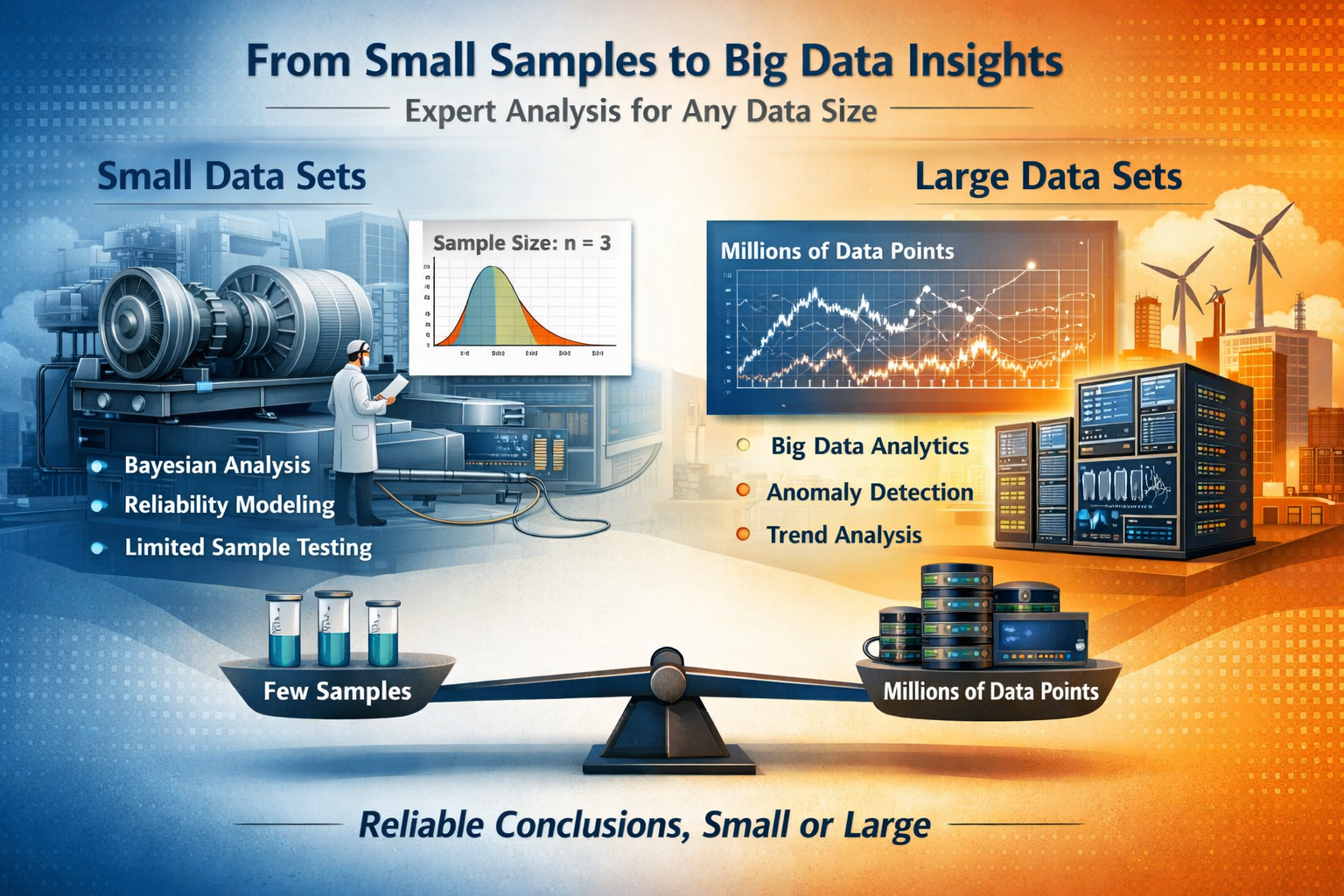
We specialize in extracting statistically valid conclusions across the full spectrum of data availability—from extremely small data sets to massive, high-frequency data streams. For large, expensive, or time-intensive tests where only small samples are feasible, we apply advanced reliability modeling, Bayesian methods, and physics-informed statistical techniques to maximize the information content of limited data while maintaining technical rigor and defensibility. At the other extreme, we routinely analyze large-scale data sets. In these cases, we employ automated analytics, multivariate methods, and anomaly detection to identify subtle patterns, emerging risks, and long-term trends. In both scenarios, our focus is on producing conclusions that are statistically sound, clearly explained, and suitable for engineering decisions, management action, and legal or regulatory review.
Problem Solving
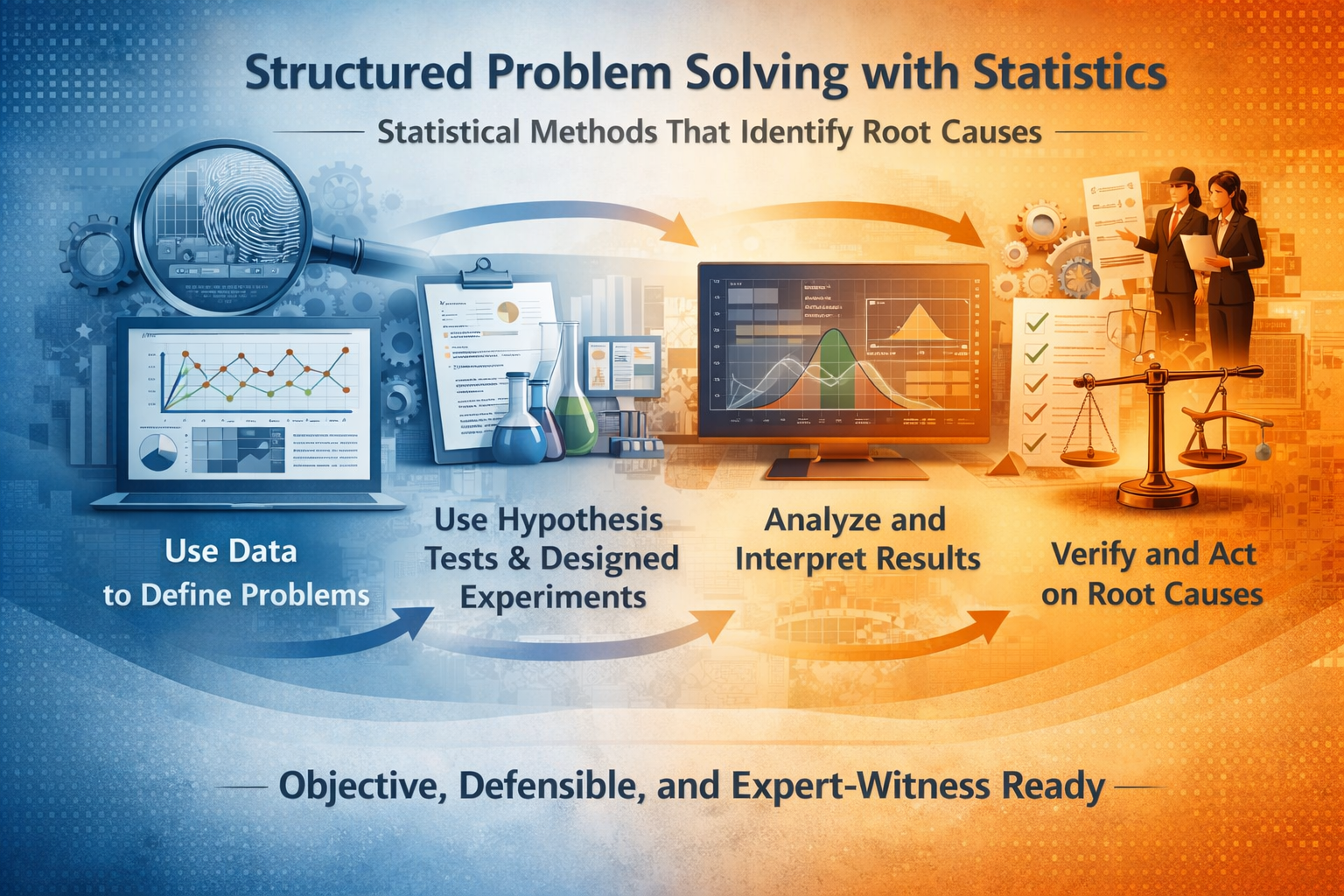
Statistical methods form the foundation of a disciplined, structured problem-solving process that produces objective, defensible conclusions. We use data to define issues precisely, distinguish meaningful patterns from random variation, and systematically identify true root causes through hypothesis testing, data stratification, designed experiments, and trend analysis. This approach ensures that conclusions are based on verifiable evidence rather than opinion or anecdote. The resulting analyses and documentation are developed to withstand technical, legal, and regulatory scrutiny, making them suitable for use in litigation support, expert testimony, regulatory inquiries, and high-stakes business decisions where clarity, traceability, and credibility are essential.
Statistical Conclusions
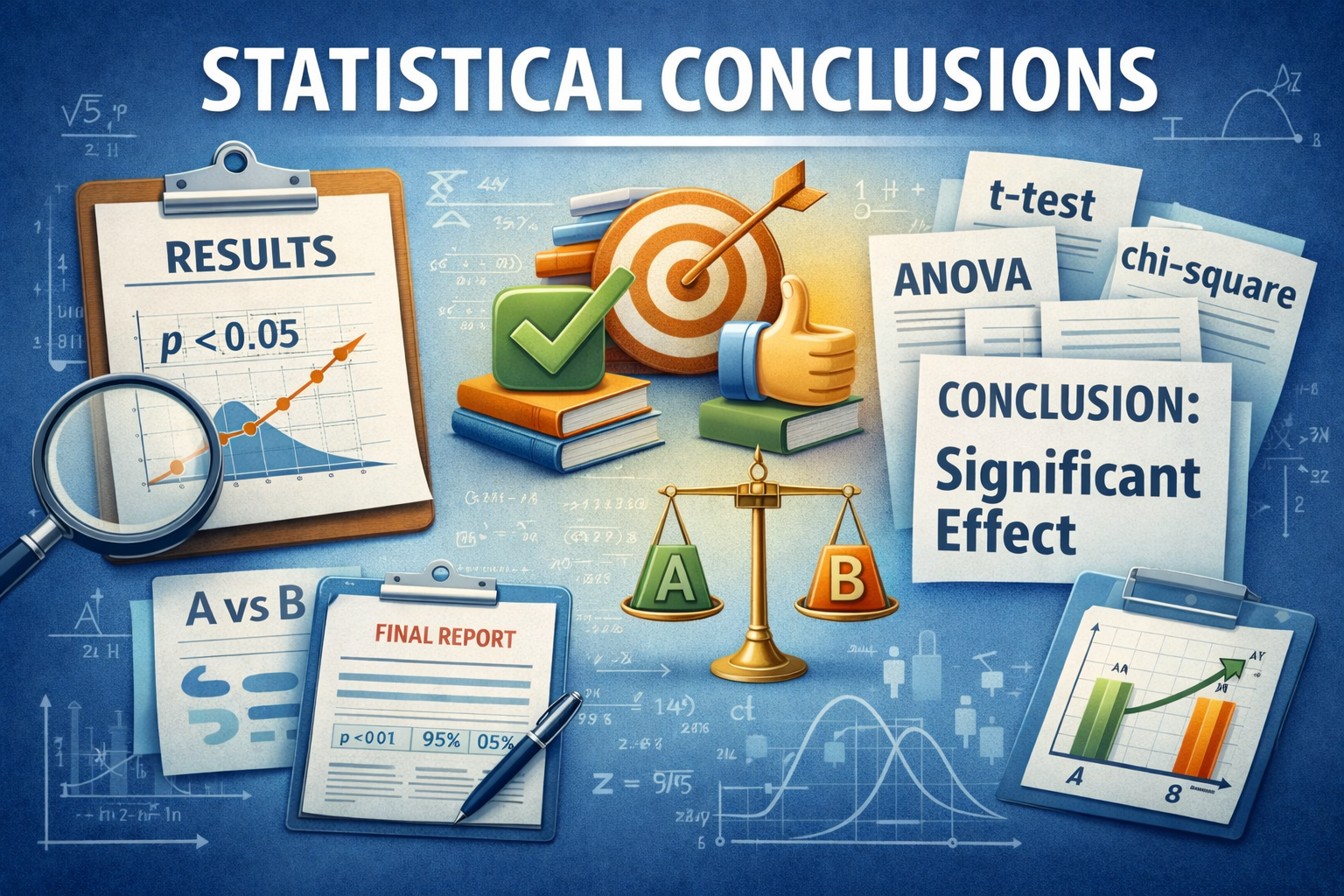
Statistical inference allows us to determine whether an observed difference is real and meaningful, or simply the result of normal variation. We apply proven statistical methods to objectively identify significance in complex, real-world situations—such as determining whether multiple suppliers are delivering equivalent performance, whether failure rates differ across geographic regions, or whether a product performs differently when used in different OEM applications. These methods are also used to assess the impact of external factors like weather, evaluate whether populations or samples are truly representative, and identify meaningful changes in performance over time. The result is clear, defensible conclusions that replace assumptions and anecdotal impressions with evidence-based insight suitable for engineering decisions, business strategy, and legal or regulatory review.
Experimental Design
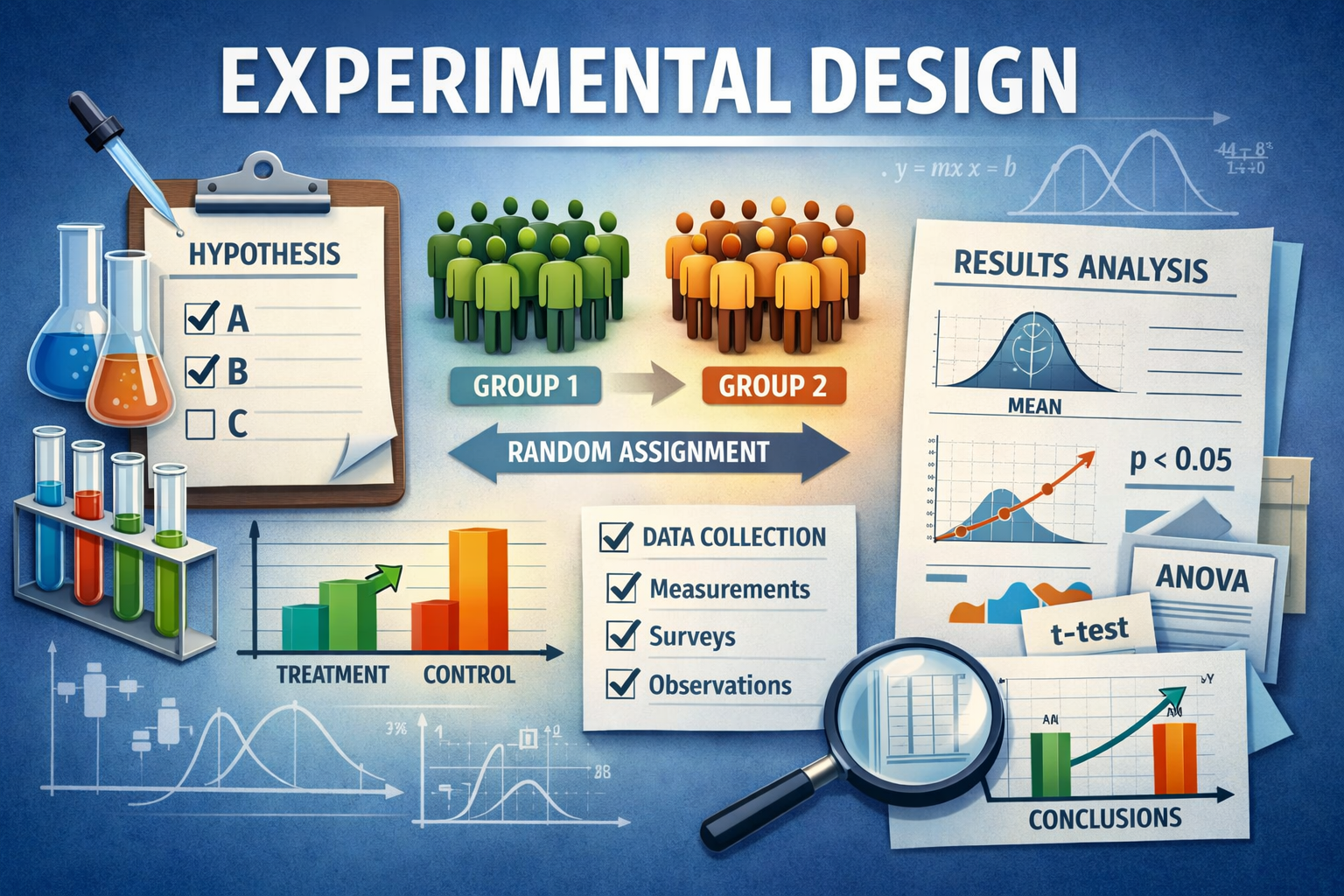
We provide deep expertise in the design and analysis of experiments (DOE) to efficiently uncover cause-and-effect relationships in complex engineering and manufacturing systems. Our team designs experiments that extract maximum information with minimal testing—reducing cost, time, and disruption—while ensuring statistically valid conclusions. We analyze results using advanced statistical techniques to quantify factor effects, interactions, and uncertainty, enabling confident optimization and decision-making. In addition to physical testing, we conduct DOE on engineering simulation models, such as finite element analysis, to develop simplified surrogate models that retain accuracy while running orders of magnitude faster than the original simulations. This approach enables rapid exploration of design alternatives, robust optimization, and data-driven decisions that would otherwise be impractical using traditional analysis methods.